

Hello! This week, we're talking about Donkey Kong sounds, Animal Crossing language, and emo robot bands.
It's all animalese to me
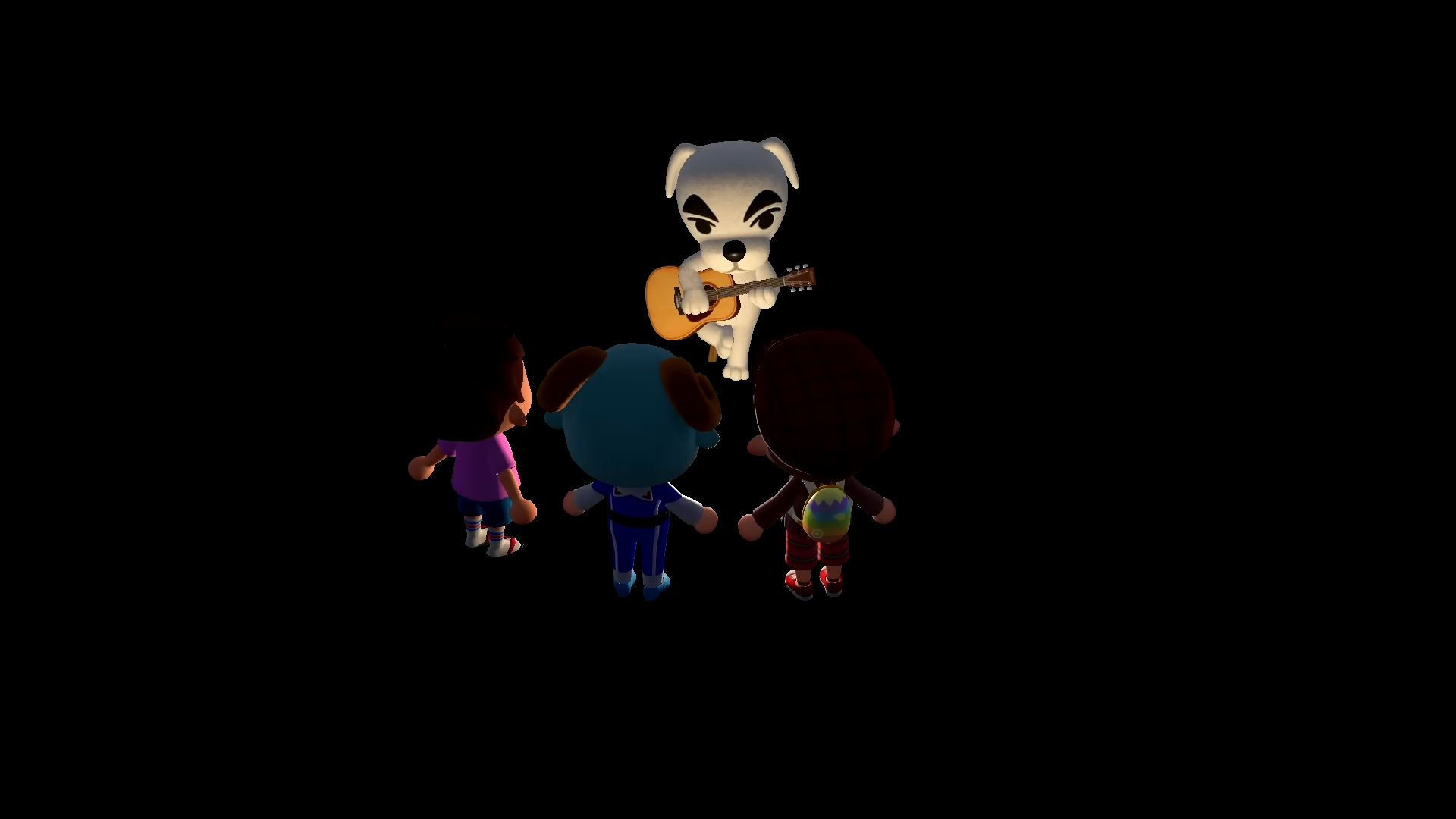
Animalese, a language native to Animal Crossing villagers, feels ubiquitous nowadays. Recent years have embedded it into the anachronistic continuum of nostalgia for trends ranging from the late ‘90s to the early 2010s. The first Animal Crossing didn’t come out until 2001, yet Animalese is a common feature of YouTube animations that reference ‘90s rap videos and an earlier era in low-poly graphics. Despite its associations with retro aesthetics, it owes its relevance today to much more recent trends in gaming and internet culture.
It’s likely that you’ve heard Animalese before, even if you didn’t know its name. The overwhelming popularity of Animal Crossing: New Horizons over the pandemic sent audio clips of the fictional language to every smartphone equipped with a social media app. For a long while, it was impossible to set foot anywhere online without hearing “Bubblegum K.K.,” a song that K.K. Slider, Animal Crossing’s resident troubadour, performs in fluent Animalese. Since then, web developers have released speech-to-text webapps, browser extensions, and development tools that let anyone speak Animalese on a whim.
This coincided with the release of Deltarune’s second chapter, allowing the cult RPG’s fandom to expand even further across the reaches of the internet. Both Deltarune and its predecessor, Undertale, feature iconic fourth wall-breaking characters who are known for their distinct Animalese-like voices and reputations as Tumblr sexymen.
Though Animalese is specific to Animal Crossing, generating unique sounds for dialogue and text entry isn’t exclusive to the franchise. “Blips” and “bleeps” are used as substitutes for voice acting across various games, though they’re especially common in retro games that have a limited capacity for audio samples. The Sims’ Simlish is another prominent example of a fictional language spoken in-game, though it differs from Animal Crossing in that it’s composed of improvised gibberish. (In retrospect, this was probably a wise decision given that Sims creator Will Wright initially considered implementing an “exotic” real-life language as dialogue.) Like Pingu’s Pinguinese, Simlish draws from a tradition of ad hoc gibberish that includes Grammelot, a theatrical convention with origins that date back to the sixteenth century.
Instead, Animalese attempts to retain the phonemic character of the language it emulates. In a 2001 interview, sound engineer Taro Bando explains that the Animal Crossing team originally attempted to use voice synthesis programs to produce realistic sounds, only to find that they were sped-up during playback. As some players have discovered, the English version of Animalese usually consists of samples that sound out individual letters; Japanese Animalese sounds more true to the original language because it has a smaller set of distinct phonemes, making it easier to approximate using synthetic speech.
Dark day at the Jake Paul factory
This week, OpenAI announced that its Jake Paul video generator Sora will shut down by the end of April, launching a wave of internet schadenfreude unequalled since the “nepo hire at the war crimes factory” discourse cycle.
Sora was the video generator responsible for countless obnoxious Ring doorbell videos, videos of deceased celebrities competing at the X Games, and racist parodies of MLK speeches. Its main creative-control feature, Cameos — make a consistent character using an image of yourself or a face that appeared in one of your text-to-video Sora generations — never really worked. It only seemed accurate for people who were already represented in the training data, like Sam Altman or Jake Paul.
Sora was built to be fun: if you wrote a prompt like “someone tells a joke onstage” or “a guy sings a song,” it would fill in the blanks with its own auto-tuney voices and cornball humor. But the ease of creation hastened a race to the bottom: the homepage was an obnoxious wall of celebrity heads popping out of toilets, shouting into doorbell cams, and being crushed in hydraulic presses.
Quarantining AI content on its own social network doesn't sound like such a terrible idea, but the financial incentives weren't there. OpenAI massively subsidized generations, providing 30 free videos daily, compared to rivals that charged $1.50 or more per generation. But a hit Sora post made you 0 dollars; people just used the generator for free and then moved their slop to networks where they could monetize it.
It’s hard now to find a Sora fan. The news of its cancellation comes long after casual users got bored of it, which mostly happened within weeks of release. As a Similarweb traffic chart shows, even dedicated slop-slingers decamped to Grok Imagine, which had few qualms about content and generated more daily videos for free. API power users (not represented on that chart) switched to the Chinese model Seedance 2.0, which has leapfrogged Sora 2 in generation quality. And artier AI types have always been haters, due to the difficulty of getting Sora to do baseline video production stuff like respecting user-supplied start and end frames.
Slop observer Dolan Darkest dug up some of the lamest “save Sora” memes from the site’s surviving cultists, and you can’t say they aren’t representative of the service as it is today. The messages are deeply inane, and the videos — after several OpenAI nerfs to the quality of free user generations — are aggressively bright and boring yet also teeming with queasily shifting details.
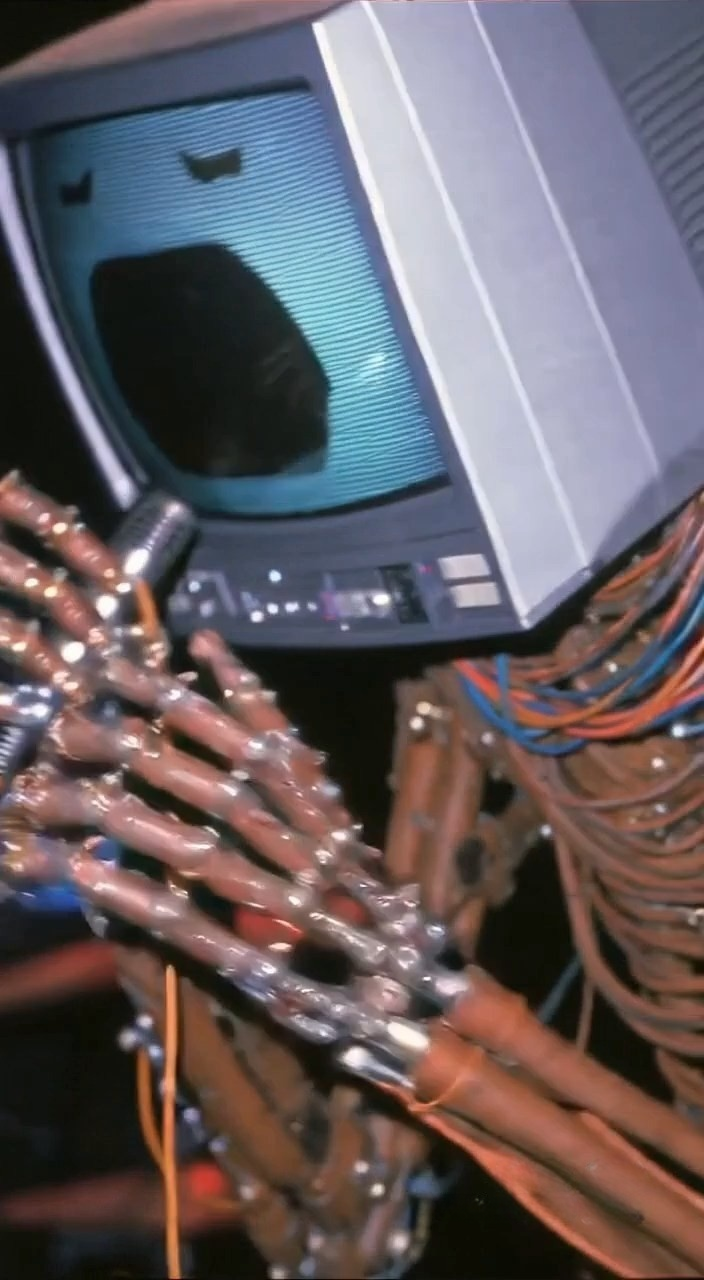
But it’s more interesting to look at the platform’s top users than its cringiest. Keigo Matsumaru, one of the site’s biggest creators with 111K followers, stopped posting a couple of months ago; in the site’s early days, he posted a lot of flashy style experiments. Toshi Yamamoto, another familiar name, recently posted an apparent farewell to the site starring a group of emo robots.
To give Sora its due: There were plenty of people in 2023 acting like AI would never remember that hands have 5 fingers, let alone create a five-fingered robot starring in a competently edited mini-music video with splitscreen shots and alternate angles. But there are issues (Can we get some more energetic movement? Where are the drums? Do I see a 6th finger in that splitscreen?) that Sora was not built to solve. It wasn’t consistent enough for reshoots, and didn't take direction as well as an image generator, much less a human.
Sora attracted a lot of users due to the wild technological advance it represented, but left them in an unsatisfying middle ground. Most soon lost interest due to the overwhelming ugliness of the site’s trends, the difficulty of revising or shaping their own generations, and the everyday bad user experience of a service that constantly refuses or mangles your requests. It was a video slot machine that cost a fortune to run but wasn’t fun enough to play.
Chum Box

AI
Will Anderson’s dramatic reading of an LLM’s thought process while playing Scrabble is an instant classic [link]
TikTok removed more than half of the episodes of the massively popular but strongly disliked horny-AI series Fruit Love Island (also deleted on YouTube), leading to a meltdown by its creator [link]. Wired ran a good overview of the many horrors of the AI cartoon-fruit subgenre, which share the same unpleasant playbook as earlier AI cartoon-cats uploads [link].
Games
“Every time I hear Aquatic Ambience, I think of this” [link]
Wikipedia Gacha gives you all the thrill of opening card packs and collecting rares without the headache of actually playing a gacha game. Tying rarity tiers (Super Special Rare, Ultra Rare) to article quality is pretty slick [link]
A Half-Life childhood memory [link] from Bchungus
A hardcore 5-hour history of the Japanese Tetris: The Grand Master series [link]
The sandbox game Vietnam War, a ludicrously ambitious and janky “grunt simulator,” has reportedly added theme parks [link; Steam page]
Lucid Blocks, a Minecraft-like dreamcore game that previously uploaded a bunch of mesmerizing teasers [link], is finally out on Steam [link]
Fallout cartography [link]
On Twitter, the maker of a horny anime visual novel about breast milk revealed that their main character 1) could transition from male to female, and 2) was based on the infamous right-wing game dev Grummz. This confusing loadout of political signals led to much consternation in the comments, but did earn the dev some free publicity [link]
The Internet
A snake that hates Markiplier [link]
A delightful edit of mundane things [link]
A charming shortform animated series inspired by Professor Layton and educational TV [link]
Connect with EX
- Feedback? Hit reply or email team@exresearch.co
- Follow us on Twitter [link]
- Follow us on Threads [link]
- Follow us on Bluesky [link]
- Support us with a donation by clicking Account